
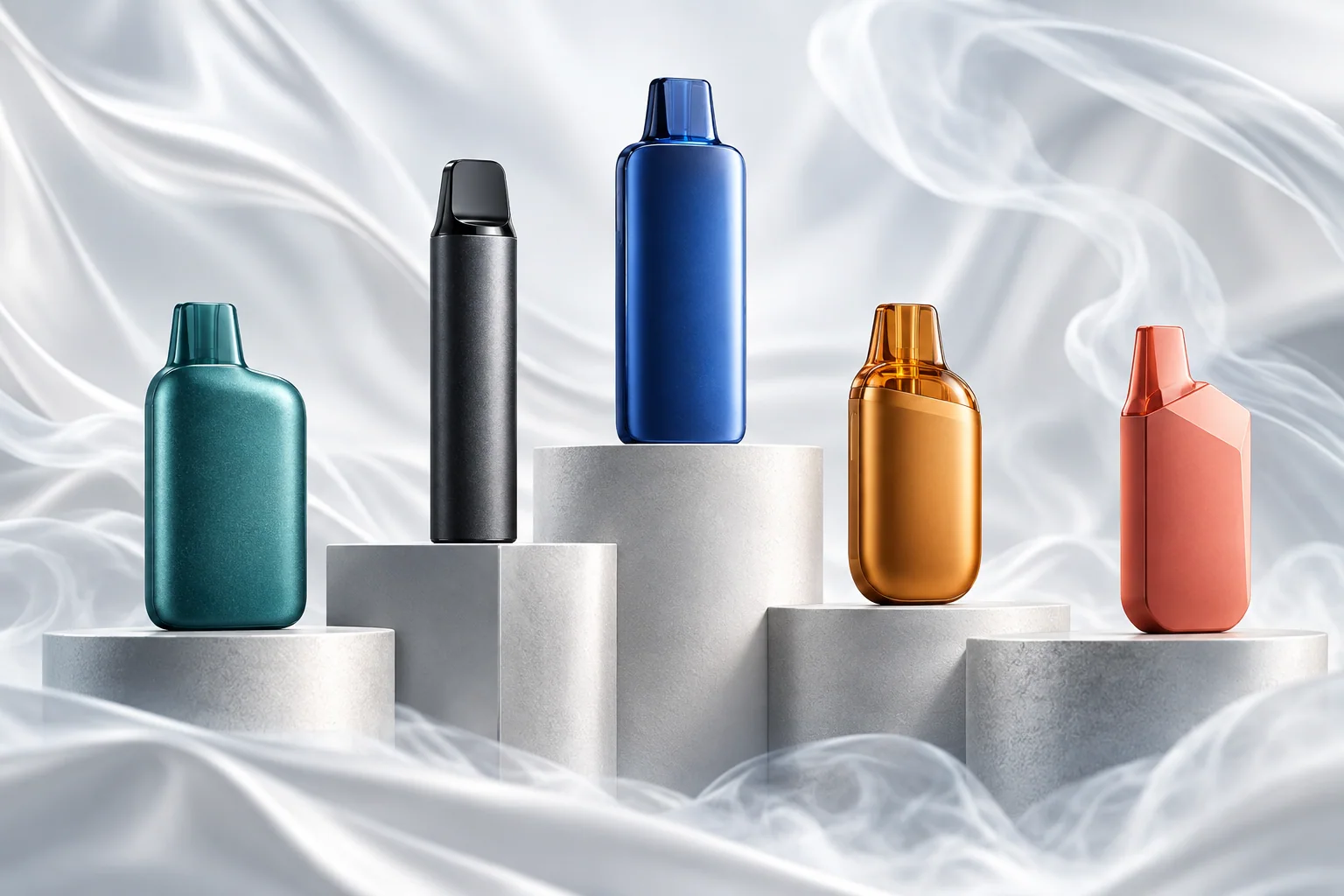
Our 2026 brand verdict
The best disposable vape brand is the one that publishes coherent product families, confirms meaningful specifications, and maintains models that serve distinct needs. I rank brands on the devices buyers can actually compare: battery, liquid capacity, coil design, controls, displays, format, and current market stock. Logo recognition is not a performance metric.
Use the best disposable vape brands 2026 comparison to see confirmed model counts and current availability. This guide explains how to interpret that catalog and why a brand with one transparent, well-specified model can beat a larger range filled with ambiguous variants.
What separates a top brand
First, the range must be understandable. All-in-one disposables, reusable battery systems, and replacement pods should be identified correctly. Second, core specifications must be present. Third, mode names and puff estimates need context. Fourth, flavors and stock must be attached to the exact model rather than presented as a vague brand-wide promise.
Strong brands also make tradeoffs visible. When Normal mode carries a higher estimated puff count than Boost or Turbo mode, the listing should say so. When a pod needs a separate battery, the package description should say so. Clarity is part of product quality because it prevents the wrong purchase.
How we compare brands
| Criterion | What earns a higher score |
|---|---|
| Range clarity | Distinct models and formats with accurate package roles |
| Specifications | Confirmed battery, liquid, coil, charging, modes, and controls |
| Usability | Useful indicators, visible liquid, airflow, or power control |
| Availability | Current model and flavor stock in the selected market |
| Claim discipline | Puff estimates presented as estimates, not guarantees |
I do not award points for unsupported superlatives. A brand must earn its position through confirmed product data and practical differentiation.
Choose the model before the brand
Brand reputation can narrow a shortlist, but the model determines daily use. A compact visible-tank device and a high-capacity screen-equipped device from the same company solve different problems. Compare the specific battery, charging method, liquid capacity, coil, modes, airflow, and dimensions before treating two products as substitutes.
Check the current product page for flavor availability and package contents. A replacement pod is not a complete device; a reusable dock changes the ownership model; a claimed 50K mode can have a lower-output assumption than a 30K Boost mode. Exact format beats brand shorthand every time.
Why current stock changes the ranking
A technically excellent model has limited value when the required flavor or component is unavailable in your market. We therefore distinguish confirmed models from in-market stock. That prevents a global brand catalog from masquerading as a local shopping list. It also keeps recommendations tied to what an adult buyer can actually order.
Start from the full selection of disposable vapes, filter by format, and then compare brands among the products that remain. This order produces a useful decision: need first, model second, brand third.
The strongest buying rule
Pick the brand that explains its device best and supplies a model that matches your use. Favor confirmed USB-C charging, explicit battery and liquid figures, documented coil design, understandable modes, and practical status information. Treat puff totals as estimates influenced by draw length and power.
My conclusion is firm: there is no universal winner across every format. The best disposable vape brands in 2026 are the brands that make comparison easy and deliver a clear fit at model level. If a listing hides the details, move to one that does not.
Brand size is not range quality
A long model list can be useful, but only when each product has a distinct purpose. Ten nearly identical names with unclear specifications create choice friction rather than value. A smaller brand with three well-separated formats can be easier to shop and easier to support. We therefore look at usable differentiation, not raw SKU count.
Range quality also depends on compatibility. If a brand sells battery docks, reusable bases, or replacement pods, the relationship between components must be explicit. Buyers should never have to infer whether a pod works alone. Clear package roles increase the value of a system; vague roles turn the same system into a risk.
How to create a two-brand shortlist
Write down three non-negotiables: format, confirmed capacity, and one usability feature such as a liquid indicator or adjustable airflow. Remove every model that fails one requirement. From the remaining products, compare exact flavor stock, charging, coil, and modes. Only then compare brand preference, design, and price.
This method converts a crowded brands page into a short decision. It also keeps marketing familiarity in the correct position: useful after technical fit, never before it. The winning brand is the one that still has a qualifying model at the end of the filter.
Repeat the filter whenever stock changes. A recommendation is only actionable when the qualifying model and selected flavor remain available in your market.