
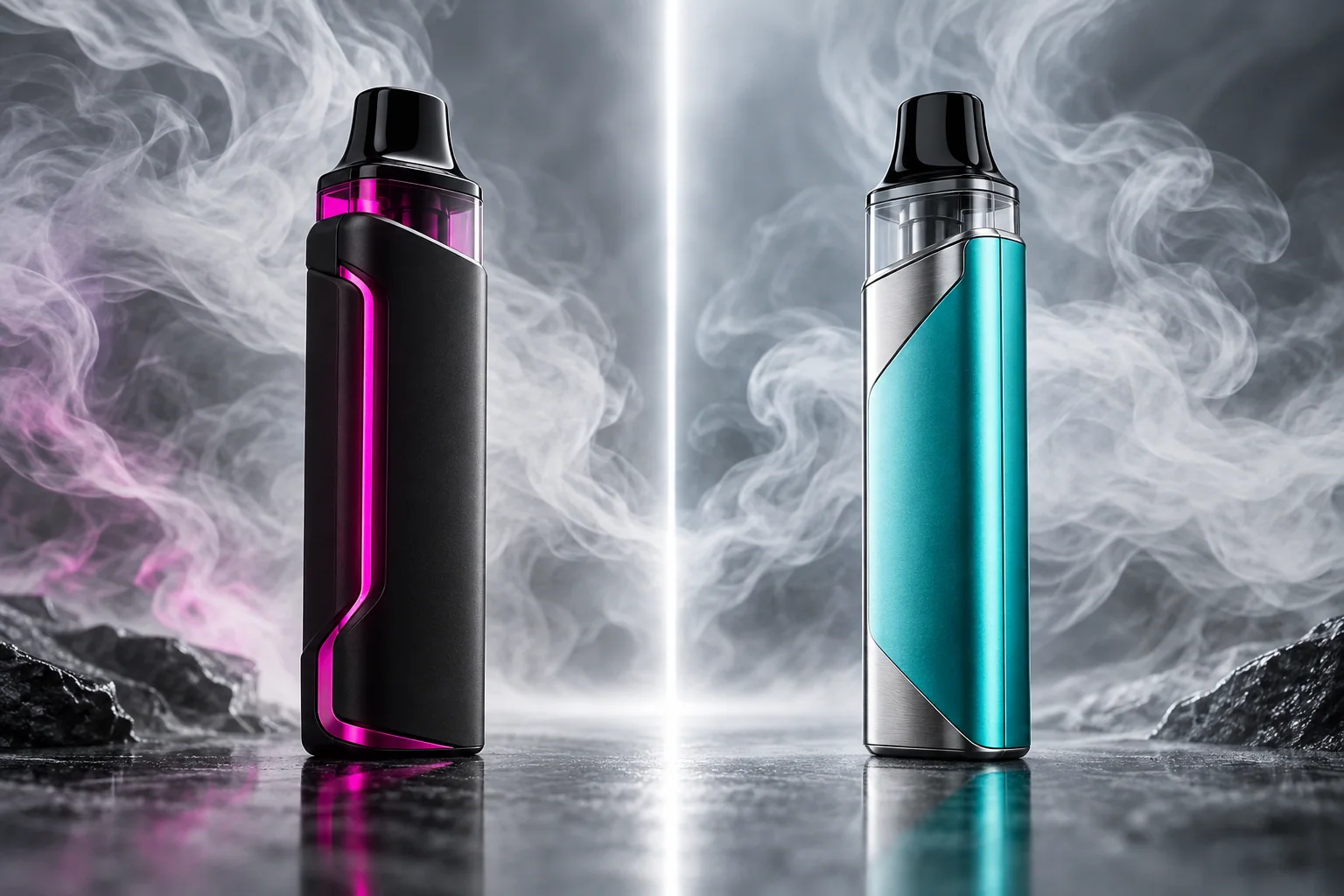
Verdict: compare model depth against focused simplicity
JNR wins when you want to compare a broader family of device concepts; UPENDS wins when you want a more focused set of clearly differentiated formats. That is the useful conclusion of this JNR vape review. Neither name wins every purchase because the decision changes with battery, liquid, modes, package type, and current stock.
Start with the JNR disposable vape range and the UPENDS disposable vape range. Compare actual models, not brand color palettes. The stronger buy is the one whose confirmed specification set matches your use.
JNR: broader choice demands closer reading
A wider lineup gives buyers more ways to match shape, capacity, interface, and flavor preference. It also creates more room for confusion. Similar-looking models can carry different batteries, screens, airflow systems, and published modes. I treat JNR’s breadth as an advantage only when each listing identifies those differences clearly.
For JNR, build a shortlist by format first. Separate standard all-in-one devices from any system that depends on another component. Then compare battery, liquid, charging, coil, and mode data. Do not assume that the highest puff number is the flagship for your use.
UPENDS: focused formats are easier to compare
UPENDS presents a tighter decision when products are organized around a few recognizable formats. A focused catalog reduces overlap and makes it easier to see whether a product prioritizes capacity, compactness, or system reuse. That clarity is valuable for a buyer who wants to reach a decision quickly.
The same verification rules still apply. Confirm whether the package is a complete device, a battery kit, or a replacement pod. Check charging and battery data, then verify flavor stock for the exact model. A simple range is useful only when the package role remains explicit.
Head-to-head scoring framework
| Decision | JNR advantage | UPENDS advantage |
|---|---|---|
| Choice | More models and form factors to shortlist | Fewer overlapping choices to decode |
| Comparison | Strong when specifications are complete | Strong when package roles are clearly separated |
| Best buyer | Someone willing to compare several models | Someone who wants a direct format decision |
| Final check | Current model, flavor, stock, battery, liquid, coil, and charging data | |
This is not a laboratory ranking of every historical product. It is a purchasing framework built from confirmed catalog information and current availability.
Specifications that decide the winner
Battery and charging determine whether a large sealed liquid capacity is practical. Coil and power mode affect output and consumption. Airflow control changes draw resistance. Screens and visible tanks reduce uncertainty. Package type determines whether you can use the item by itself. Those factors carry more weight than branding.
Published puff counts remain estimates. A Normal and Boost pair is useful because it exposes an internal tradeoff, but it does not create a universal comparison between companies. Draw length, output, and testing method differ. I rank transparent specification sets above extreme unsupported numbers.
Which brand should you buy in 2026?
Choose JNR if its broader lineup contains a model whose exact battery, capacity, controls, and flavor fit your needs. Choose UPENDS if a focused product format gives you a clearer match with fewer decisions. If both offer a suitable model, let confirmed data and current stock break the tie.
For a wider benchmark, compare the best disposable vape brands side by side. My final call is not a draw: JNR wins on breadth; UPENDS wins on decision simplicity. Your model-level requirements decide which of those advantages matters.
Flavor choice should come after hardware fit
A desirable flavor cannot rescue the wrong device format. First confirm that the product is complete, rechargeable in the expected way, and equipped with the capacity and controls you need. Then compare the flavors currently attached to that exact model. Do not assume every flavor promoted by a brand exists across its entire range.
Stock also changes the head-to-head result. If the preferred JNR model is unavailable while a suitable UPENDS model is confirmed, UPENDS becomes the actionable choice; the reverse is equally true. Brand rankings should help a purchase happen, not recommend unavailable catalog history.
Who should choose each brand
Choose JNR when you enjoy comparing form factors and are willing to read several listings to find the strongest match. Its core advantage is optionality. Choose UPENDS when you want to identify a package role quickly and narrow the decision with less overlap. Its advantage is focus.
In both cases, reject any model whose critical data remains unconfirmed. A broad range without clarity and a focused range without compatibility detail both fail the same test. The best brand is the one that turns your requirements into a verifiable product choice.
Price should enter only after that fit is established. A cheaper incompatible pod is not a saving, and a more expensive feature you will never use is not value. Compare like-for-like packages, then let current price settle the final tie.